Hunt Visuals
Videographer SOP
Content Systems · Videographer Workflow

Filming the BTS YouTube shoot

One client. One location. One day. You walk away with a full YouTube episode and 8 to 12 shorts cut from the same footage. This is exactly how we shoot it, every time.

Who it's forVideographers
You produce1 episode + 8–12 shorts
Cameras3 rolling
Golden ruleKeep recording
🎬
The golden rule Keep recording until Lloyd says stop.
01 · Before the shoot

Lloyd's plan

Lloyd fills this in before the day so you know exactly what we're doing. Different clients need different things. One day might be about capturing a strong testimonial and showing where the client started versus where they are now. Another might just need good content, so we show how we go about filming it. Knowing what Lloyd wants up front lets you steer everything towards it.

L
Lloyd Hunt
Fills this in before the day
Client name
Business type
Location and date
The angle or story of this episode — what is this day actually about
What Lloyd wants to get out of the client or the episode
Three to five talking points to hit
1
2
3
4
5
Specific shots or moments in mind
Anything to plan around — timings, access, client nerves, kit
02 · The outcome

What you're making

One client, one location, one shoot day. You walk away with one YouTube episode plus 8 to 12 shorts cut from the same footage. Same process every time.

Reference · Long form

The YouTube episode

Watch a finished episode so you know exactly what the day needs to add up to. 1080p, landscape, story-led.

Watch the reference ↗
Reference · Short form

The shorts

The 8 to 12 shorts we cut from the very same footage. See the format we're feeding before you press record.

Watch the reference ↗

What you'll produce

  • 1 YouTube episode from the day
  • 8 to 12 shorts (up to 60s) for Instagram
  • Lloyd in action clips we reuse in future content
Lloyd is filming his own content on the day too. So things you film might have his camera's perspective cut into the same scene in the YouTube episode.

Why we film this

  • YouTube is where warm leads decide. Short form pulls people in; the episode shows them what working with Lloyd is actually like before they book a call.
  • It quietly kills the big objection — being awkward on camera. Seeing real people do it makes the viewer think they could too.
  • So natural, real moments matter more than anything polished or staged.
03 · The kit

Your three cameras

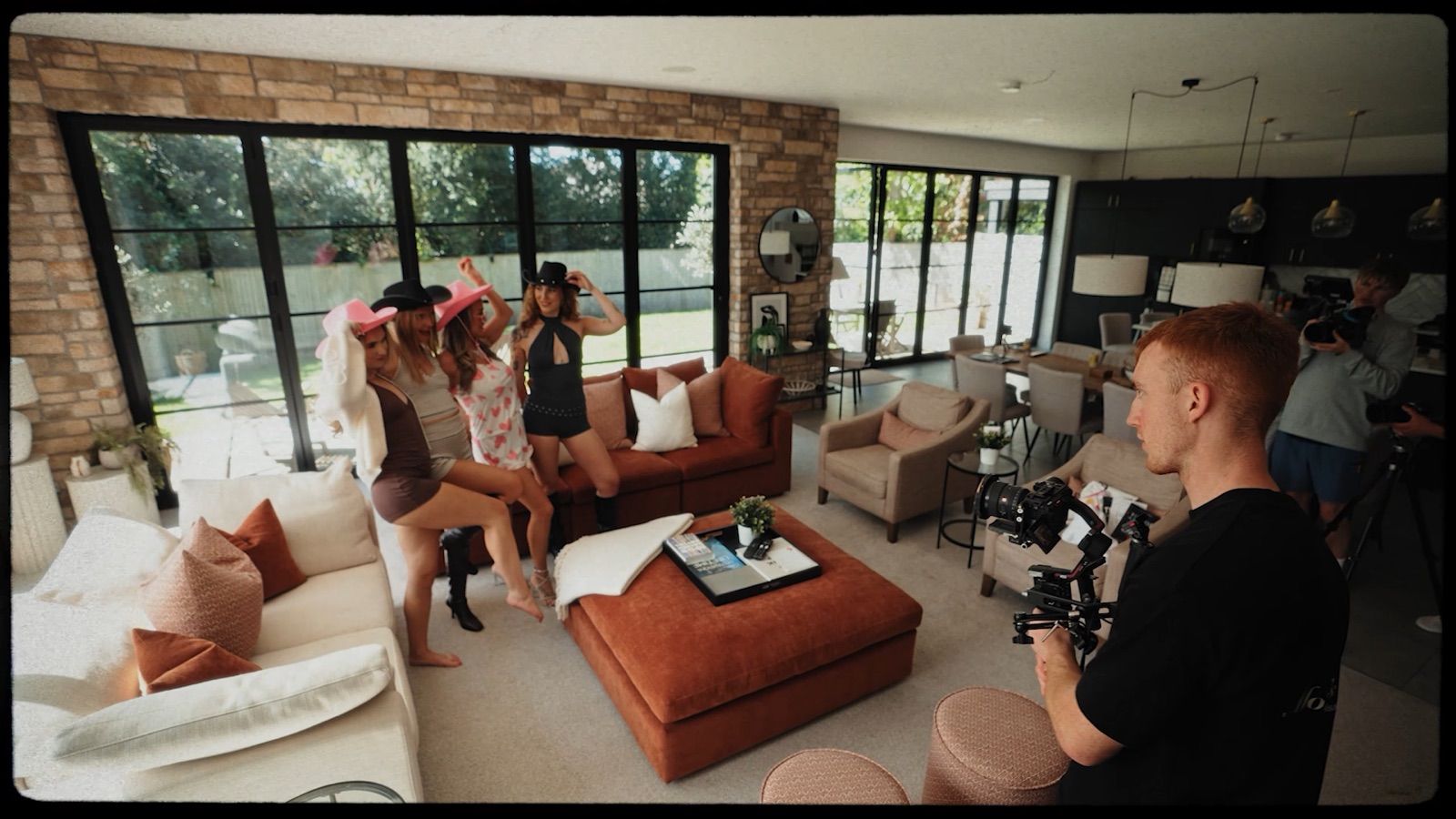
Three cameras run through the day, each with one job. Know what each one is for and you'll never miss a shot.

1

Lloyd's camera

You don't need to worry about this one. Lloyd sorts the main footage for the client on it. Your focus is on capturing Lloyd and how the shoot takes place.
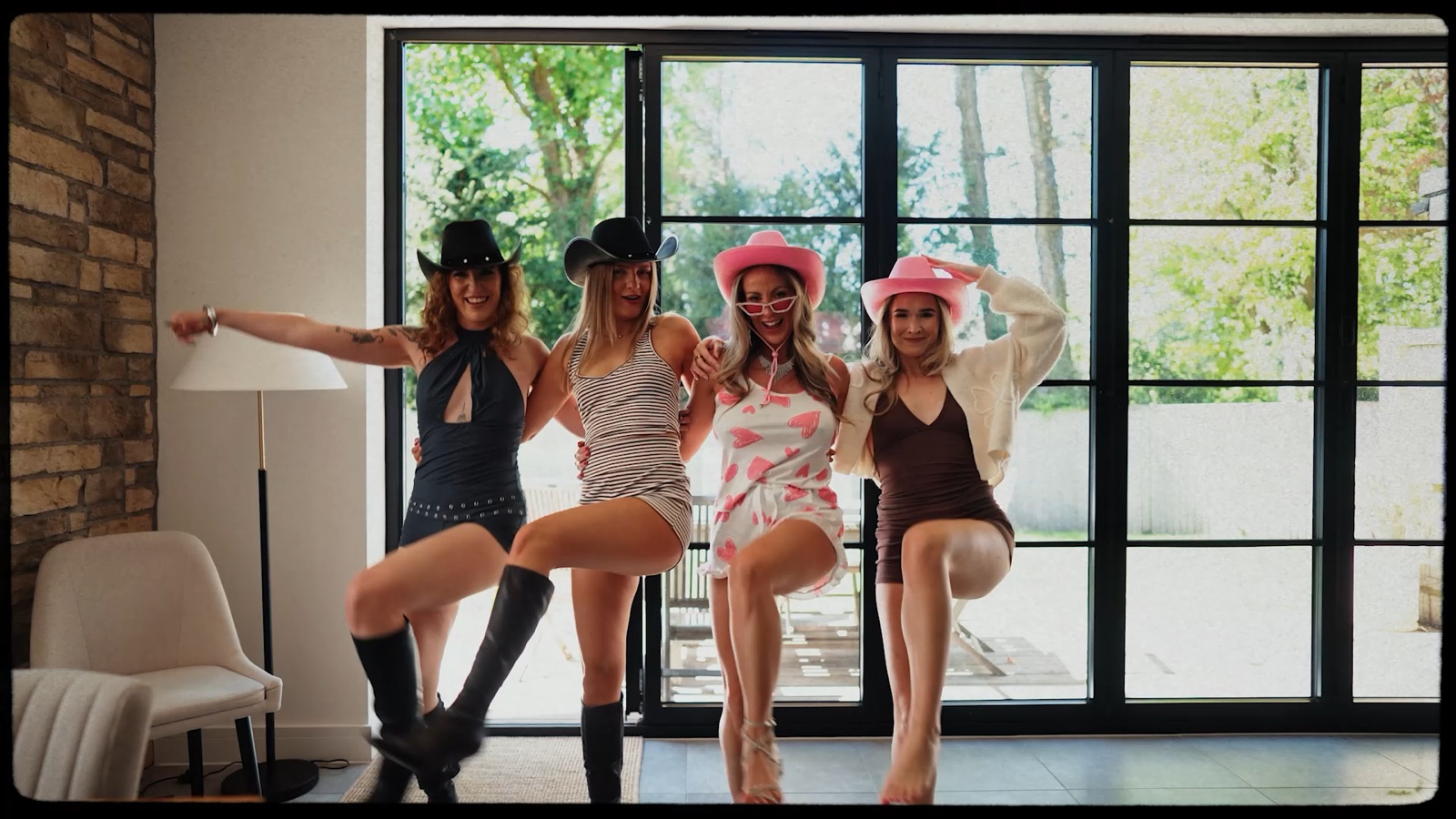
Lloyd handles it
Lloyd's camera setup
Lloyd's camera in use
2

Behind the scenes camera

This is you, on the move. Lloyd talking to camera, the conversation with the client, and all the B-roll.
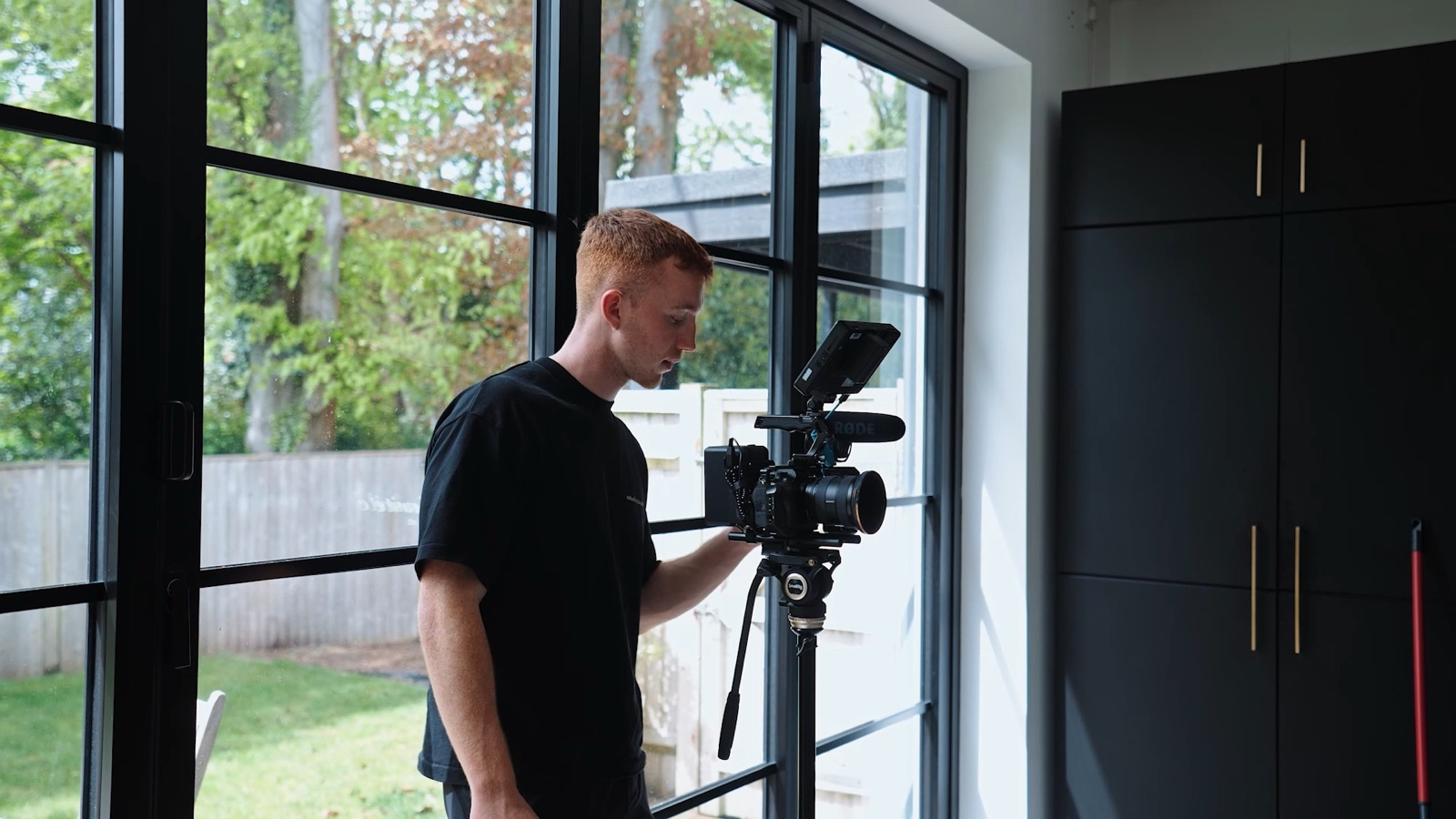
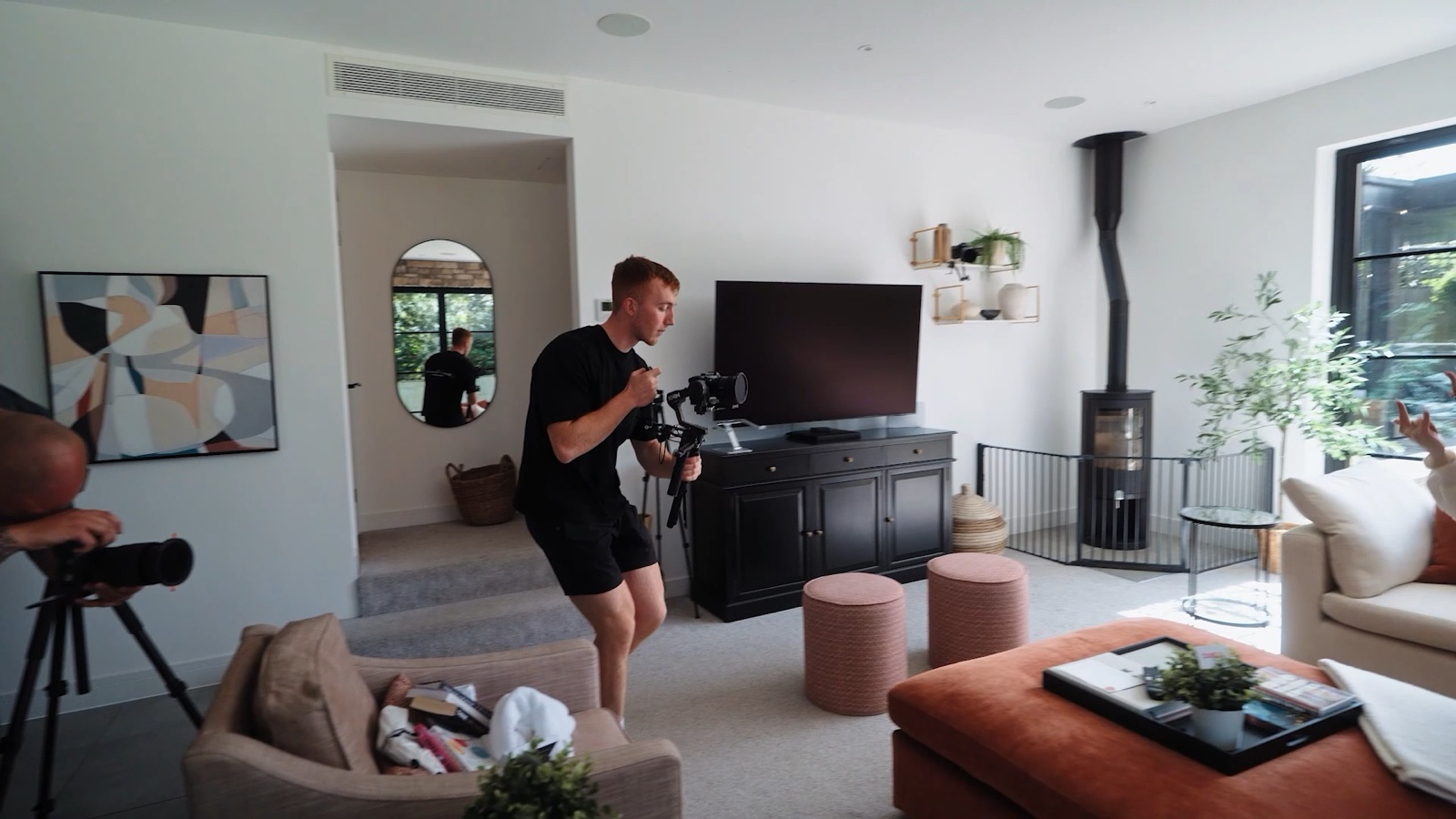
80% of the episode
Behind the scenes camera angle
3

Match cut camera — wide, high up

Locked on the magic arm or a tall tripod, set wide, left rolling. Purely for nice wide angles, transitions and timelapses between scenes. Reset it wide in every new spot, hit record, leave it.
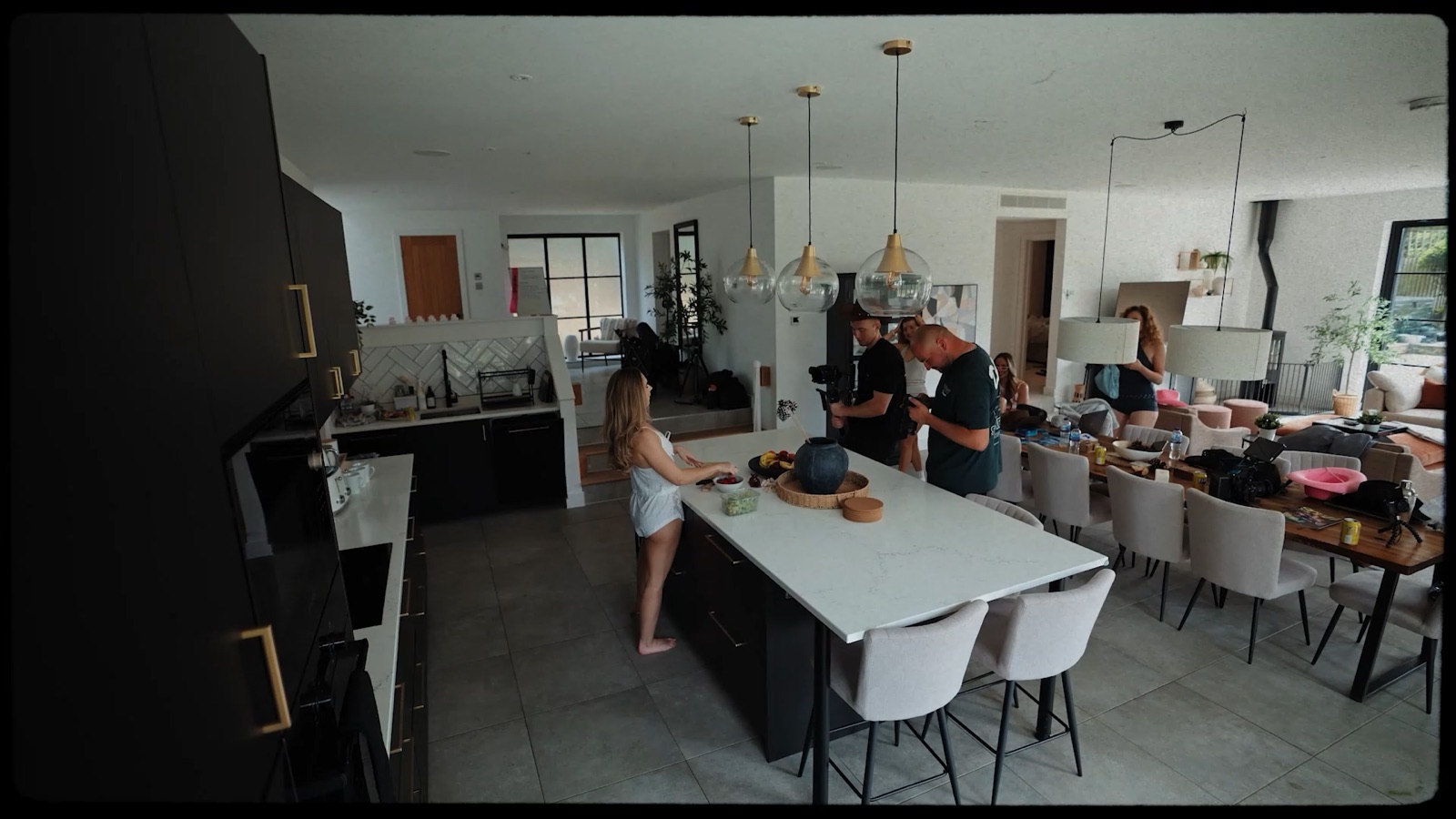
Set & leave
Match cut wide camera setup
Match cut wide angle
The all-day habit
For each new activity: grab one match cut and ask Lloyd one question. That's what gives us the 8 to 12 chapters and the short reels.
04 · Your position

Where to stand

Film Lloyd and the client's faces so we can see what they're saying to each other, as if you're sat at a dinner table with them. Not behind them, and not so far away that you're not part of the conversation.

Where to stand example one
Where to stand example two
05 · Get it right in camera

Filming help guide

Nail these on the day and the edit looks unreal with almost no work. The settings, the framing, and getting colour and brightness right before you ever press record.

Settings

01
Shoot in 4K
Lets us crop wide footage into vertical reels without losing quality.
02
25 fps
Shoot at 25 frames per second so it looks natural to the eye.
03
White balance
Set the white balance correctly in every new location.

Framing

When filming Lloyd, frame him a touch back and keep him near the centre. That way we can crop the same shot into a vertical short without chopping his head off.

Framing example one
Framing example two
Framing example three

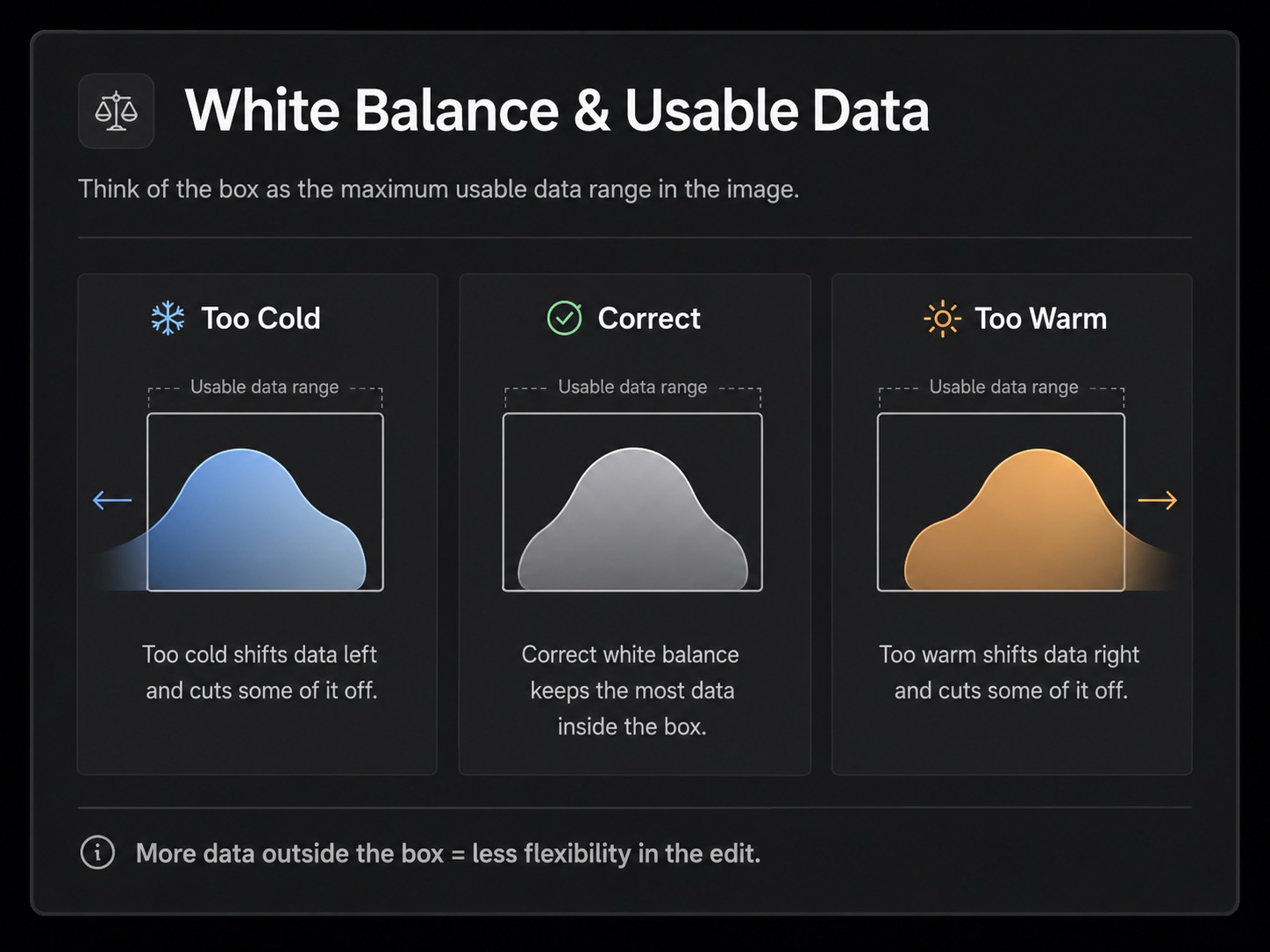
White balance

This is the colour of the footage. Aim for the middle every time.

Too coldWhite balance too cold
If it looks too cold, make it warmer.
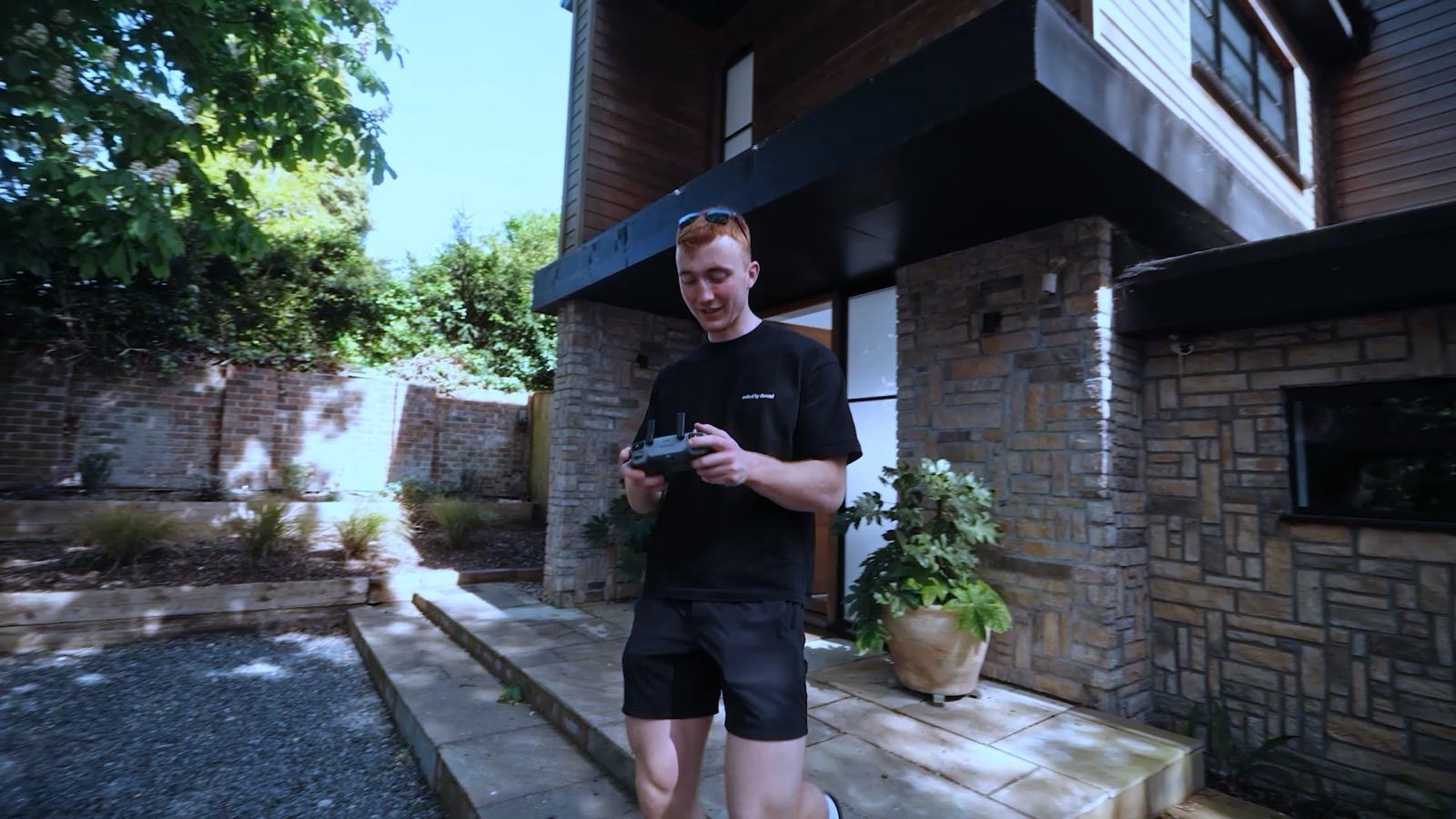
CorrectWhite balance correct
This is correct and looks good.
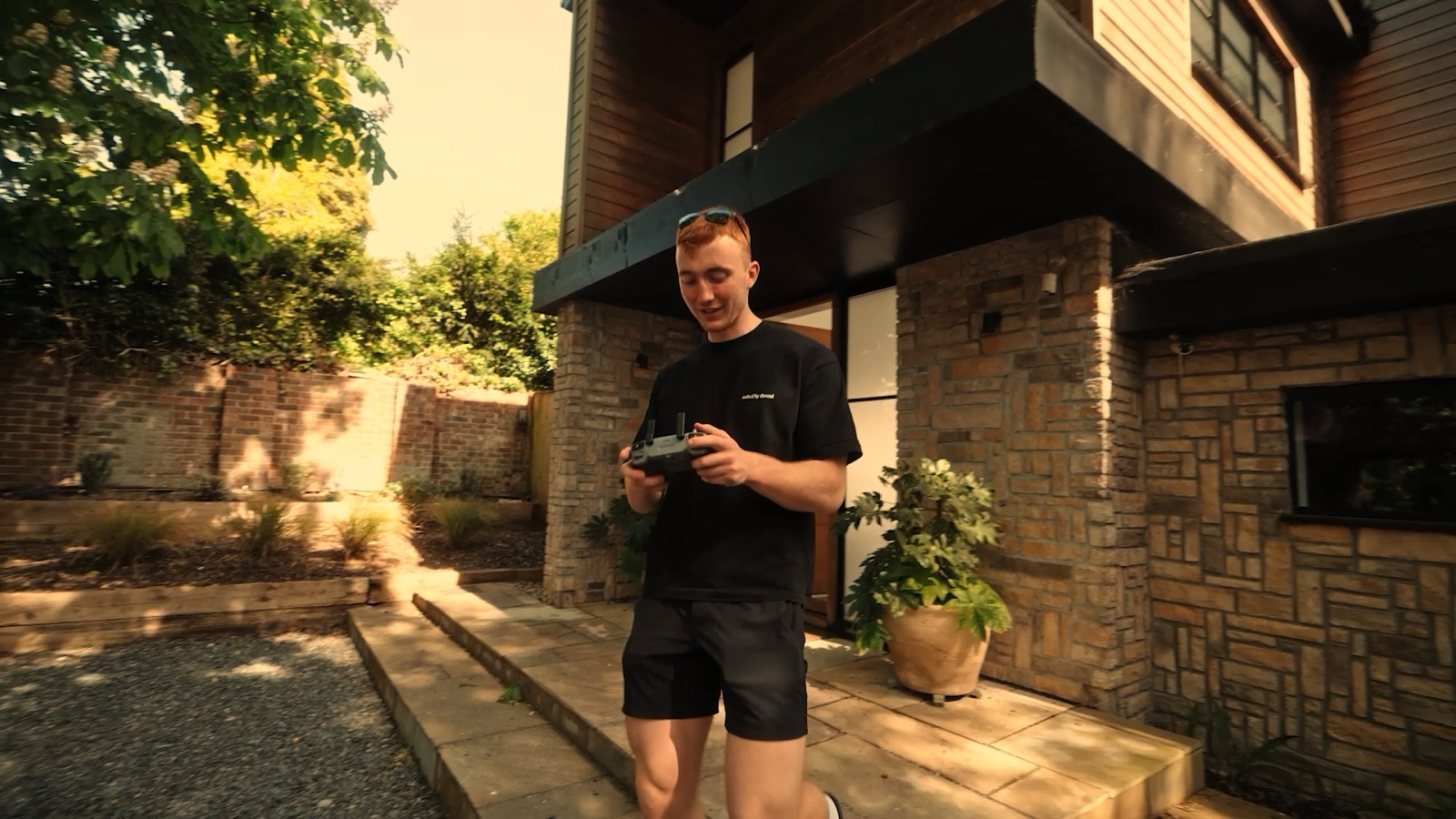
Too warmWhite balance too warm
If it looks too warm, make it colder.

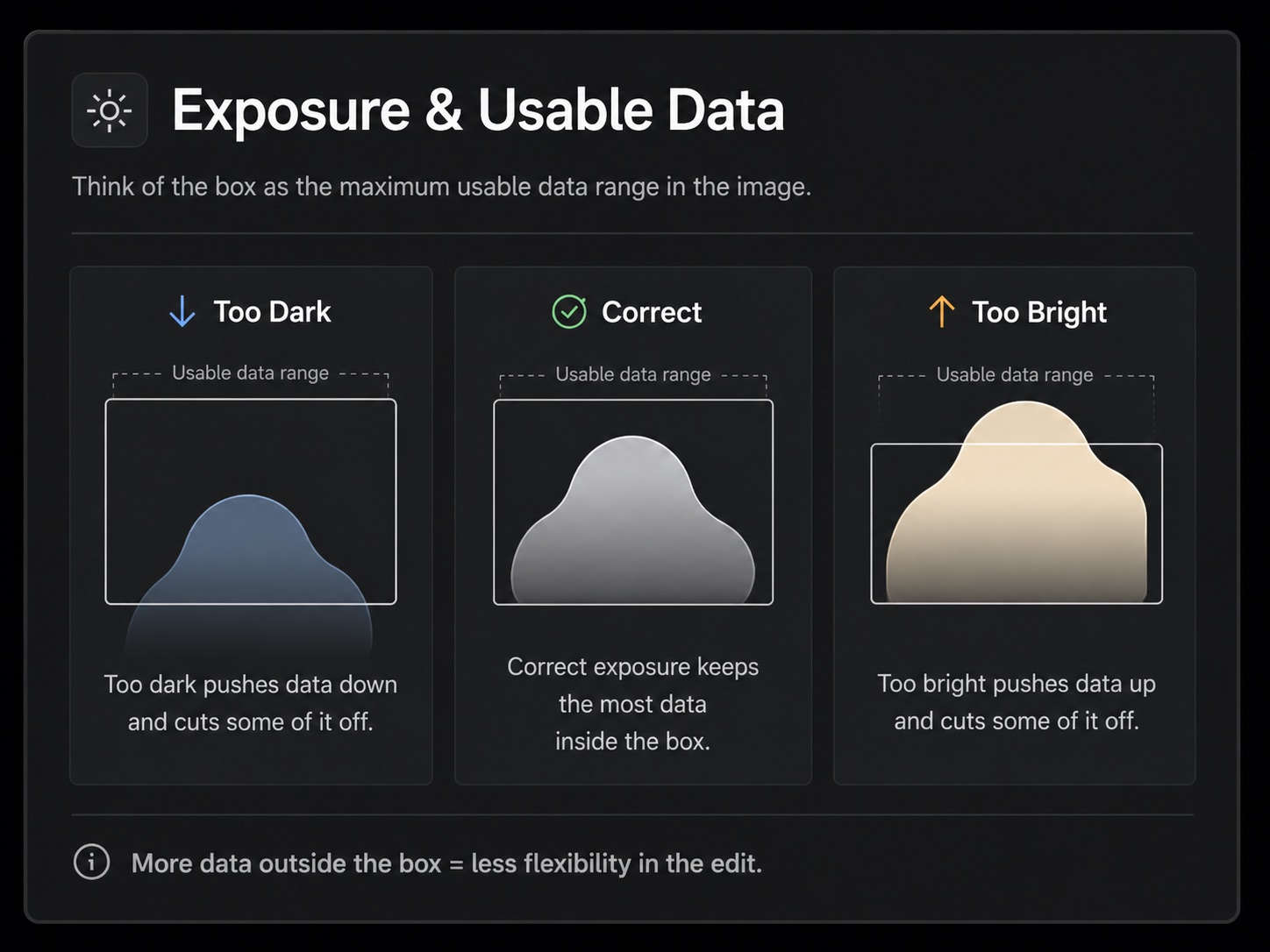
Exposure

This is the brightness of the footage. Aim for the middle every time.

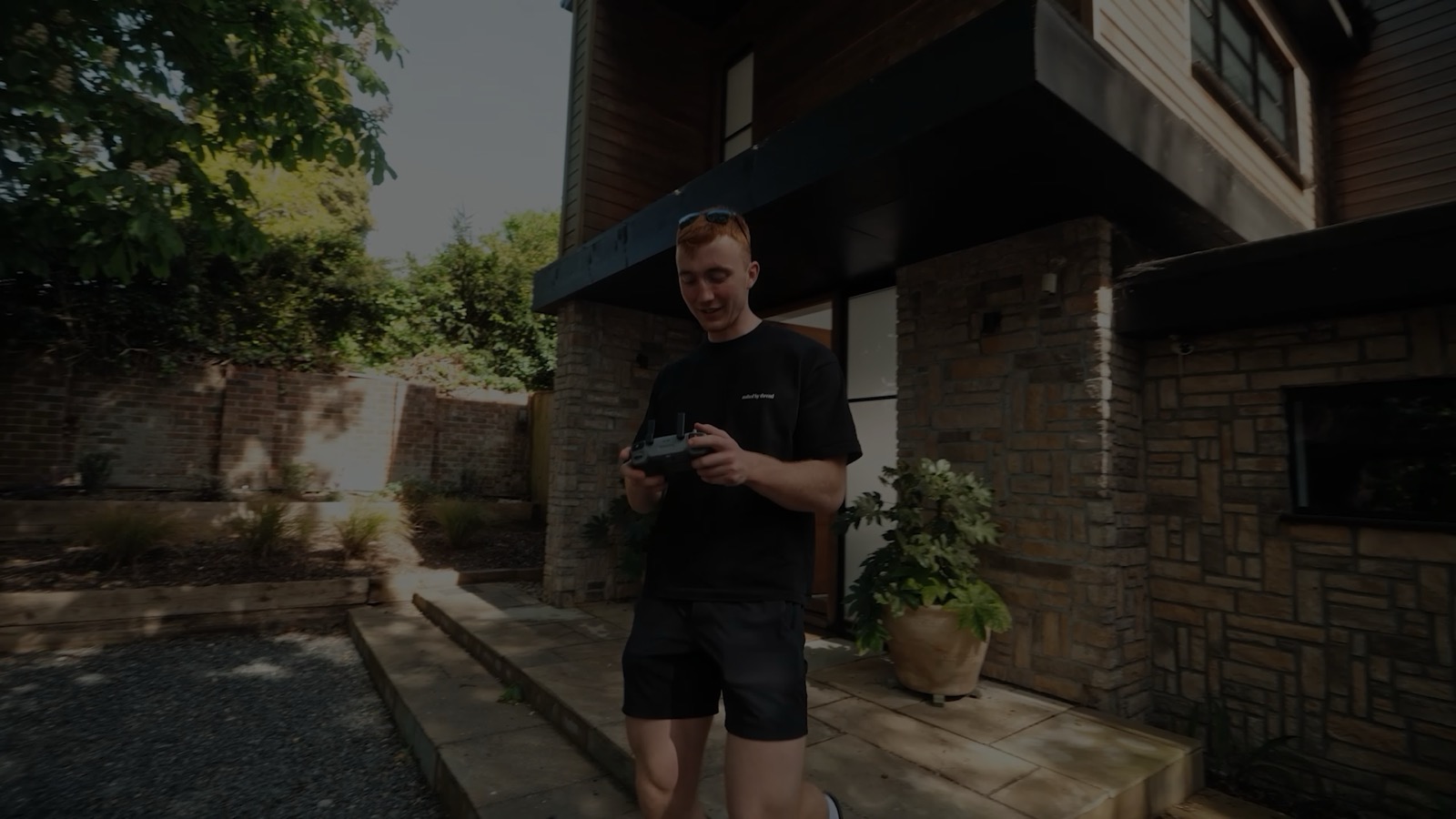
Too darkExposure too dark
If it looks too dark, make it brighter.
CorrectExposure correct
This is correct and looks good.
Too brightExposure too bright
If it looks too bright, make it darker.

Why this matters

Think of the footage you shoot as having a limited amount of data to use in the edit. If you shoot it way too warm, too cold, too dark or too bright, you use up that room and we can never fully fix it later. Nail it on the day and the edit looks unreal with almost no work.

Data room example one
Data room example two
06 · On the day

The seven chapters

These are the 7 blocks of the day, in the order they appear in the finished video. They're not the same length — the intro is about a minute, everything else runs as long as it needs to. Get each one properly before moving on.

Filming loop
New activity = wide match cut + one or more questions + action B-roll.
1
IntroWhat's the day and the goal. Can be filmed later, for the start of the episode.
2
GreetingMeet the client. Keep recording, even if you haven't met them before.
3
SetupHow we go about setting up filming the client.
4
CoachingLloyd directing the client.
5
B-roll + photosThe work and the reactions. Film more than you think you need.
6
Client contentIf it's happening — scripts, B-roll, drone.
7
OutroRecap and the main lesson.
If you're stuck, ask Lloyd one of these
  1. What are you doing now?
  2. Why is this important?
  3. What's the main thing to focus on here?
07 · Before you wrap

End of day check

A quick check that you've got enough coverage before you pack down.

Every chapter
Talking + action
Most chapters
A wide match cut
Across the day
8–12 clean talking points